STRESS MANAGEMENT STRATEGIES

Stress can be defined as a state of worry or mental tension caused by a difficult situation. It can form due to many different reasons such as feeling under pressure, big changes in life, lack of control, overwhelming responsibilities, experiencing hate or abuse or stages of uncertainty and worry. Stress lives in people in different ways depending on their comfort & resilience levels, past experiences, resources available to them or support from others.

By identifying symptoms, it can be far easier to acknowledge and then address them. Some signs are as follows:

● Feelings of anger, overwhelm, anxiety, unenjoyment of life, dread, worry, neglect or loneliness

● Breathing difficulties

● Panic attacks

● Blurred eyesight or sore eyes

● Sleep problems, including insomnia and oversleeping

● Fatigue, fainting or dizziness

● Muscle and heartaches

● Sickness

It is important to address these issues as soon as possible to reduce the impact on your mental and physical health. Some methods to help are:

● Take deep breaths and close your eyes

○ Elevated levels of oxygen in the brain can reduce stress and anxiety significantly.

○ Try the box breathing technique bringing full, deep breaths to the pit of your belly as you count in fours. In for four, hold for four, out for four, hold for four… and repeat.

● Meditate

○ Meditation can help you relax deeply and calm your mind, allowing yourself to focus on one thing at a time and getting rid of thoughts that crowd your mind

○ Find a mediation app that can guide you, such as HeadSpace, Calm, 10 Percent Happier. They will build in accountability and a structure for you to follow.

● Check in with yourself

○ It is important to identify what you are feeling.

○ Start journaling or writing down your thoughts to not only release them from swirling around your head, but also so you can acknowledge and subsequently address them.

● Avoid drugs and alcohol

○ They add to stress levels and you can become addicted as you lean on a coping mechanism.

○ Instead make sure to get enough sleep, maintain a balanced diet and stay active.

● Take breaks when needed

○ They help you stay integrated between work and relaxation, allowing productivity to be maintained as well as keeping you from overworking.

● Seek support from loved ones

○ They can lighten your mental load and help release pressure.

○ Doing fun things with loved ones can ease stress

● Get hobbies

○ People with hobbies are less likely to suffer from low moods, stress and depression. They can activate pleasure centres in your brain, releasing dopamine and creating feelings of relaxation and happiness.

○ Hobbies can also decrease cortisol level, which is a hormone associated with stress.

○ For example, gardening has been proven to increase serotonin levels in the brain and improve psychological health

○ In addition, engaging in mindful activities can ease your stress by reducing activity in the amygdala (so try out colouring, doodling, stress ball, yoga, nature walk etc…)

● Practice self affirmations

○ Studies have shown that affirming yourself about your strengths, accomplishments and confidence reinforces these positive thoughts and can reduce anxiety

○ Some positive affirmations to relieve stress are:

  • I am in control
  • I am enough
  • I am safe
  • I am doing my very best
  • I am becoming stronger
  • I am free from stress
  • All is well in my world
  • I can do this

POWER OF VISUALISATION

Visualising is when you have a clear vision of the future; seeing yourself in a situation in the future where something has happened, usually where you have some level of success and/ or completed a goal. By clearly defining these visions, it can provide motivation to move towards it and often reveal some of the steps that you can begin to take to achieve it.

Additional advantages to using visualisation:

● Studies have shown that visualisation reduces stress due to imagining a better future or outcome of any situation.

● The practice can also enhance cognitive processes such as attention, concentration and memory.

● Visualisation allows you to prepare for events, such as interviews and speeches, and imagine positive outcomes, thus increasing your confidence. You can create the best possible outcome of an upcoming event due to being able to visualise different outcomes and perfecting them.

● In practicing it, you can increase productivity and motivation benefitting projects, teams, and businesses.

There are broadly two types of visualisation, both helpful in their own ways:

Positive visualisation

○ It allows you to decrease stress due to thinking of positive outcomes and focusing on how the future can go well rather than badly.

○ Clear steps that improve confidence and allow you to prepare your abilities to make the better outcome happen.

○ Provides inspiration and motivation to move towards what you want.

Negative visualisation

○ This improves your resilience due to thinking of potential bad outcomes, so when the outcome happens, you are better prepared for the inevitability of the hardship.

○ It allows gratitude for what you have now, due to the bad outcomes being worse than the present moment.

○ It is a component of stoicism, which is a practice that allows you to accept what nature gives you rather than fearing pain or desiring pleasure.

○ If used to prepare for an event such as a presentation, you can visualise mistakes you might make and improve yourself, so you don’t make them when you’re actually doing it.

However, remember to use negative visualisation at a limit. It is important to remember not to turn negative visualisation into negative thinking and let it invade your stream of thoughts.

If you want to know how to use visualisation, here are some tips to help achieve your dreams:

● Decide what you want – pick a particular focus to work towards.

● Make it vivid – picture the the scene fully, incorporate details as well as your own feelings – bring to life the smells, views, feelings, sounds etc to make it feel real.

● Imagine each step – break down how to achieve that goal and visualise each stage of completion of working towards it

BUILDING CONFIDENCE

Self-confidence is defined as a feeling of trust in one’s abilities, qualities and judgement, and that you have a sense of control in your life. Studies have shown that confidence has various benefits:

● Linked to longer, healthier living

● Leads to higher happiness levels

● Aids not only mental but also physical health

● Achieve greater levels of success

Confidence plays a vital role in how we function. Without it, our self-esteem can drop and we can spiral into self-criticism, leading to persistent feelings of sadness, depression, anxiety, anger, shame, guilt, or suicidal thoughts. Low confidence also leads to not taking on new challenges as we doubt our abilities to manage them. This can lead to missed opportunities and avoidance of situations. To prevent this, here are some tips:

Practice self-care

○ Assess your needs on what you need to do to make yourself feel better about yourself.

○ Exercising regularly, sleeping well and developing a healthy diet can help you increase self-confidence by promoting a positive self-image.

Build positive relationships

○ Negative relationships can hurt you and impact your levels of confidence. Identify the quality of your relationships, and for those that aren’t serving you, keep your distance.

○ Find the “Radiators” in your life, who can boost your confidence and overall happiness; spend your time within their orbit.

Be proud of small achievements

○ Confidence comes from achieved goals, so set targets, even small ones to get started. Once you have the end in sight, track your progress and celebrate along the way.

○ Remember that success can come in any form and appreciate even the smallest ones, gaining more and more faith in your abilities.

Don’t compare yourself to others

○ Remember that everyone is different, everyone has their own unique abilities, including you.

○ Use others as friendly competition rather than comparison, strive to be the best version of yourself.

Listen to others

○ Listening gives you a chance to learn new things, especially from those more experienced or with a diverse perspective.

○ Gaining new knowledge and learning can help you boost your confidence.

Accept your mistakes

○ Don’t be afraid to be wrong, and instead learn from your mistake to become better.

○ Remember that everyone makes mistakes, it all depends on what they do from then onwards.

Practice self affirmations

○ Studies have shown that affirming yourself about your strengths, accomplishments and confidence reinforces these positive thoughts.

○ Some positive affirmations for confidence are:

  • I let go of limiting beliefs and choose to trust myself
  • I have the strength and courage to overcome any challenge
  • I am worthy of accomplishing my goals
  • I have unlimited potential
  • I am fearless and confident in myself and all my abilities
  • Today I face my day with confidence and endless courage
  • Everything I need is within me, I am in control of my own life
  • I deserve to become the best version of myself
  • I believe in myself and my worth
  • I am good enough and accept myself the way I am

Not all of these will “work” for you, so try them out, find the resonance, and start taking the steps to build your confidence.

Digital Detox

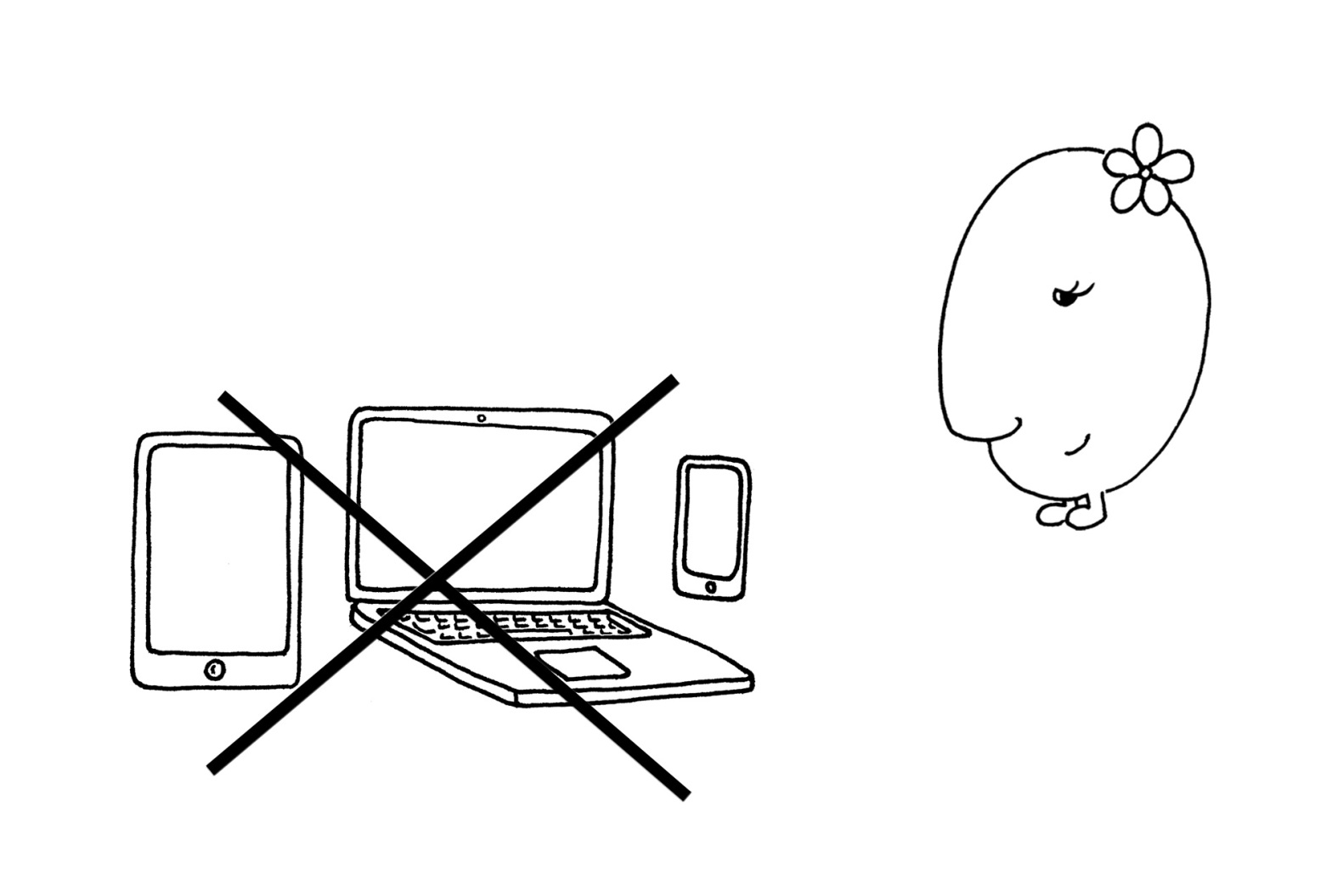
Try to switch off your phone for a while to get less distracted. I know it may be challenging, as it is almost as though we do not know how to function without our phones. But we do! A digital detox can only be good for you. It would reduce the ‘noise’ from social media particularly. We like, do not like, we judge and feel judged. Scrolling on social media can be pleasant and fun, but also time-consuming and draining of your energy. 

Therefore, to calm down and reduce worries and anxiety, leave your phone for a moment. Think twice before you pick it up again. How do I do it? I will put my phone in another room, so that I cannot even unconsciously pick it up. When out and about I have, at times, put it in a pouch so that I have to think before I open it and take it out. At one point, I even put a post-it on my phone saying “Really?!”. It reminds me of the things that actually may require my attention more than what is happening on the screen. 

Now, you try. Become more mindful and enjoy the moment. Commit to more being and less doing. You will get to experience positive moments and the worry and anxiety will bother you less. Let me know how it goes. 

Celebrate Your Successes! You Deserve It. 

Generation Panic’ers tend to rush from one thing to the other. In doing so, they forget to pause and celebrate their achievements along the way. Ambitious high-achieving professionals are often so focused on the end result that they forget to stop and appreciate what has already been achieved. They do set goals, but once they reach them, frequently do not deem it “worthy” of celebration. As a result, they do not take credit for it before they move on to the next challenge. This mindset is typical for high-achieving professionals – they are rarely satisfied with where they are and what they have done.

If we focus on, and celebrate, our achievements, we can decrease our anxiety, rather than worrying about what is going to happen next. It is exhausting to move so quickly on to the next thing without pausing. 

Building blocks for success

Oprah Winfrey says: “The more you celebrate your life, the more there is in life to celebrate.” She talks about success as a process, that every step you make and accomplish is a building block to success. Oprah believes that the speech she made in church as a three-year-old girl was the first step towards her successful TV career. What do you think led you to where you are today? 

I would like you to acknowledge your path to success. Take a moment and reflect on your achievements. Success does not come on its own. It is made of small steps. And each individual step counts. 

Reasons to celebrate 

Every small (or big) win is worth celebrating. For me, celebrating an achievement is the same as acknowledging it. I deliberately make sure I stop and celebrate; it is my way of patting myself on the back. Think of what you like to do and how you would like to celebrate all of your achievements. 

When we celebrate, we appreciate our efforts. It can decrease our anxiety, as it puts us in a positive mindset, rather than focusing and worrying about what must happen next.

If we take the time to celebrate, we can:

  1. recognise the effort we put in;
  2. figure out what our strengths are and what we are good at;
  3. reflect on what we have learned from a positive perspective. 

It gives us a positive boost in the right direction. Forward and upwards. Here is how you can learn to celebrate your achievements. 

Toolbox: Celebrate! First, set small goals so that you have many chances to celebrate. Only if we take a break to applaud the small things will the taste of success be even sweeter. So pick out some little goals now that you want to achieve. Anything from going to that yoga class to replacing your caffeinated drink or meeting an old friend for a catch-up. Tell someone about what you are focusing on, so that they can hold you accountable. And make sure you celebrate once you have reached your goal!

Promise me to celebrate your success. You deserve it.

The Positive Impact of a Gratitude Book

A gratitude book is proven to have a positive impact on our lives. It brings us a wealth of positive emotions. By practicing gratitude, Generation Panic’ers can learn to appreciate the small things in life, feel happier and be calmer. As we learn to discover the positives in the everyday moments, we can reduce our anxiety. 

Thanksgiving and the other 364 days

Gratitude is ‘the quality of being thankful; readiness to show appreciation for and to return kindness’. Do you acknowledge the goodness in your life? I think it is easy to forget to be thankful, at least on a daily basis. Apart from Thanksgiving Day, what about all of the other 364 days in the year? Because gratitude is known to have a positive impact on our mental health, it is a very good idea to learn to make it a daily habit – and the Gratitude Book can help you with exactly that.

Be clear about where you are going

It is important to check in with ourselves – to reflect on how we are feeling, what we have accomplished and where we are going. A journal can help with just that. For Generation Panic’ers, by writing down our thoughts and reflections, we can begin to understand our anxiety and how we are coping with it. By noticing what is going on, we can learn to take back control and see life more positively. Perhaps this process will even reveal coping strategies for our anxiety that we did not know we had.

One way of doing it is to start writing a ‘Gratitude Book’. Or you can call it morning pages, journaling or something similar. I am inspired by Tim Ferriss, an American entrepreneur, author, and podcaster. Every morning he writes what he calls “The 5-minute Journal”. It contains 4 or 5 bullet points that he is grateful for. Writing down things he appreciates, helps him to view his life through a positive lens. 

I also take a couple of minutes every morning to write down my inner thoughts. Again in the evening, I write for a couple of minutes. If the morning journal sets the focus and your intentions for the day, then the evening journaling helps to reflect on how it went, to deepen your learning and also see where you can make improvements. In the evening, you can also set up for the next day. Through this daily process of journaling, I have found clarity and focus: I accept where I am and I know where I am going. It is a very short and easy exercise, only requiring a couple of minutes, so there is really no excuse not to do this!

But also accept as is 

Try out this everyday exercise – both in the morning when you are clear in your mind, and again last thing at night. Remember to be honest, noting down exactly how you are feeling, however your thoughts come to you, without any filter. This book is for you, and only you, so you can be vulnerable and show your inner fears or doubts too. That is what it is for. 

Toolbox: Morning and Evening (List three things under each heading):    Morning I am (how you are feeling in that moment):
Achieve (what you want to get out of the day): Grateful for (what you are genuinely grateful for):  Evening
Achieved/Proud (what you have accomplished that day):
Improvement (do not judge, get curious as to what you could do better in a future situation):
Tomorrow (what you want to achieve tomorrow):

Find Your Creative Flow

Do you feel stuck at work in the same routines day after day? Are you struggling for inspiration? For many Generation Panic’ers this is common. With very demanding jobs and packed agendas with scheduled activities, we have little room left for creativity. We are often spinning around on a fast-paced hamster wheel – how can we get off of it? On top of this, the anxiety we are feeling is dragging is down and it can begin to feel a little claustrophobic. Ah, we need to breathe!

You and the universe

It is here something called ‘flow’ can come to the rescue. Psychologist Mihaly Csikszentmihalyi came up with the flow theory (check out his TED Talk). Flow is his answer to the question ‘What makes human beings happy?’. It is a mental state of being completely present and fully immersed in a task. He defines it as “an almost automatic, effortless, yet highly focused state of consciousness”. 

The flow is often experienced when doing something creative. Probably you have heard about ‘creative flow’ and this is the reason for the name. It has many benefits we can learn from, especially as it has been described as ‘being one with the universe’ or the ‘state of oneness’.. When we are in a creative flow we are fully engaged, we feel happy and confident. We forget about our surroundings and are completely engrossed in what we are doing, which allows us to be able to enjoy the moment. 

A great resource to tap into

This mental state can help you to reduce your anxiety, as we release the pressure and enjoy the present. For the flow to come to you, these elements should be present:

  1. Clarity – knowing what needs to be done, and how well we are doing.
  2. Doable – knowing that we can achieve it – essentially our skills are the right ones for the task.
  3. Tranquillity – not doubting yourself; a feeling of moving beyond the boundaries of oneself.

It means that when we are in flow it is a good balance between not expending an extortionate amount of effort and yet also being challenged. If it is too easy, we will just be bored! And, if Generation Panic’ers are bored then it creates a space to start to worry and letting anxiety levels rise. This is a challenge as many Generation Panic’ers are doing jobs that do not use their natural creativity. So, it is even more important to try to include creativity in our day-to-day lives, and integrate it into our work where we can. It can be enlightening, liberating and fulfilling.

So, question how youo can find activities that might bring you the flow you are looking for. Do you like to dance, draw or write? Sometimes I draw doodles on paper, whatever comes to my mind. No one has to see the drawing after all… Or I really enjoy playing with Lego and cooking too. I forget about time and worries and my anxiety reduces. These activities give me moments of genuine enjoyment.

“When in flow, I know it . . . I feel a wave of peace wash over my body, and the chatter in my mind stills.”

Lose yourself

The point is to let all doubts and distractions disappear. No one will judge you, as no one needs to be aware of what you are doing. Just let yourself relax in an effortless way. Create something without a clear goal in mind and allow yourself to be playful. Dare to try different activities, even things you have never attempted before. Who knows, you may discover something that you never thought you would or could do!

Try this exercise to find an activity that you like and unlock your creative flow: 

Toolkit: Back to basics   Dream up all the things you already do that make you feel calm, happy, peaceful and relaxed. Add other activities that you are interested in trying. The list is endless, and no idea is a bad idea. Do not rule something out just because it does not appear to be in keeping with what you would normally do. For example, listening to classical music may not be a regular pastime of yours, but try it out. Push your comfort zone, and know that if it does not work, there is no need to pursue it. Get creative and contemplate all areas of possible interest. 

As I continue to try to immerse myself in new creative activities that I enjoy, I get better at engaging my creativity. I am also increasing the time that I can stay “in it” without being distracted and wanting to get back to my to-do list. I feel happier and calmer for longer periods each time. 

Get to know in what areas you feel creative and the activities that help you feel calm. Have a go – you will feel freer, more relaxed and less anxious. I am eager to hear how you get on. 

Try Meditation & Mindfulness

Meditation has been around for thousands of years and yet, in many ways, it seems that it is most needed now. In a time where we often feel overwhelmed by all the “noise” and everything we have to do and accomplish, we forget to be in the moment, and to sit still and be silent. Meditation is just that. The opposite of noisy and being in constant motion. Meditation is said to have a hugely positive effect on mental health and reduce anxiety. It can help you by focusing your attention on one thing, to ensure you can achieve clarity of mind.

The Doing vs. the Being

Why is it so challenging to put a few minutes aside to sit still and simply catch our breath? Do we feel we have to do something every minute, every second to feel alive or to believe that we are succeeding at life? 

In fact, today, the concept of doing is playing a much bigger role than being. Generation Panic’ers live fast lives as good ‘doers’, yet the irony is that we are known as ‘human beings’ – not ‘human doings’!

There are two distinct ways of operating: the doing and the being. In meditation, or even when being mindful, we are letting ourselves be. Our minds do not wander and worry about the past or future, we are just in the moment – second by second, minute by minute.

Mindfulness in itself, or alongside meditation, can teach us to slow down. We learn to observe what is happening around us, and therefore, we can begin to enjoy the moment, rather than becoming caught up in our anxiety. And that is to be alive. As our senses become aware of our surroundings – we notice what is happening outside of ourselves. The you is separatedfrom what is happening to you. Finding that space can offer freedom and relief, as we can differentiate our thoughts from reality. Realising this can make us feel calmer and less anxious. 

Your sweet spot

How can you be mindful? There are a few other ways than the traditional meditative lotus position that would fit into the Generation Panic lifestyle, i.e. where it is not required to physically sit still, which can be difficult for a Generation Panic’er!

The trick is to find your sweet spot. Ask yourself when or where do you manage to relax and find peace in a given moment. It can be by immersing yourself in a good book, taking exercise, listening to music or taking a walk in nature. Experiment what feels good for you. In particular, for me, I find calmness sitting by a river in a park near where I live. It can still my mind and I hear my thoughts again. Sometimes an app can help, as it ensures that I “keep to time”. Therefore, even if I am struggling to feel calm and control my breathing, just blocking out the time (and having to stick to it) from the app helps. 

Brainstorm some ideas that might work for you and try them out.

The Importance of Boundaries

Do you sometimes finish a conversation or a phone call with a nagging feeling of dissatisfaction or even a sense of frustration? Did you say ‘yes’ to doing something when you actually did not want to do it whatsoever?

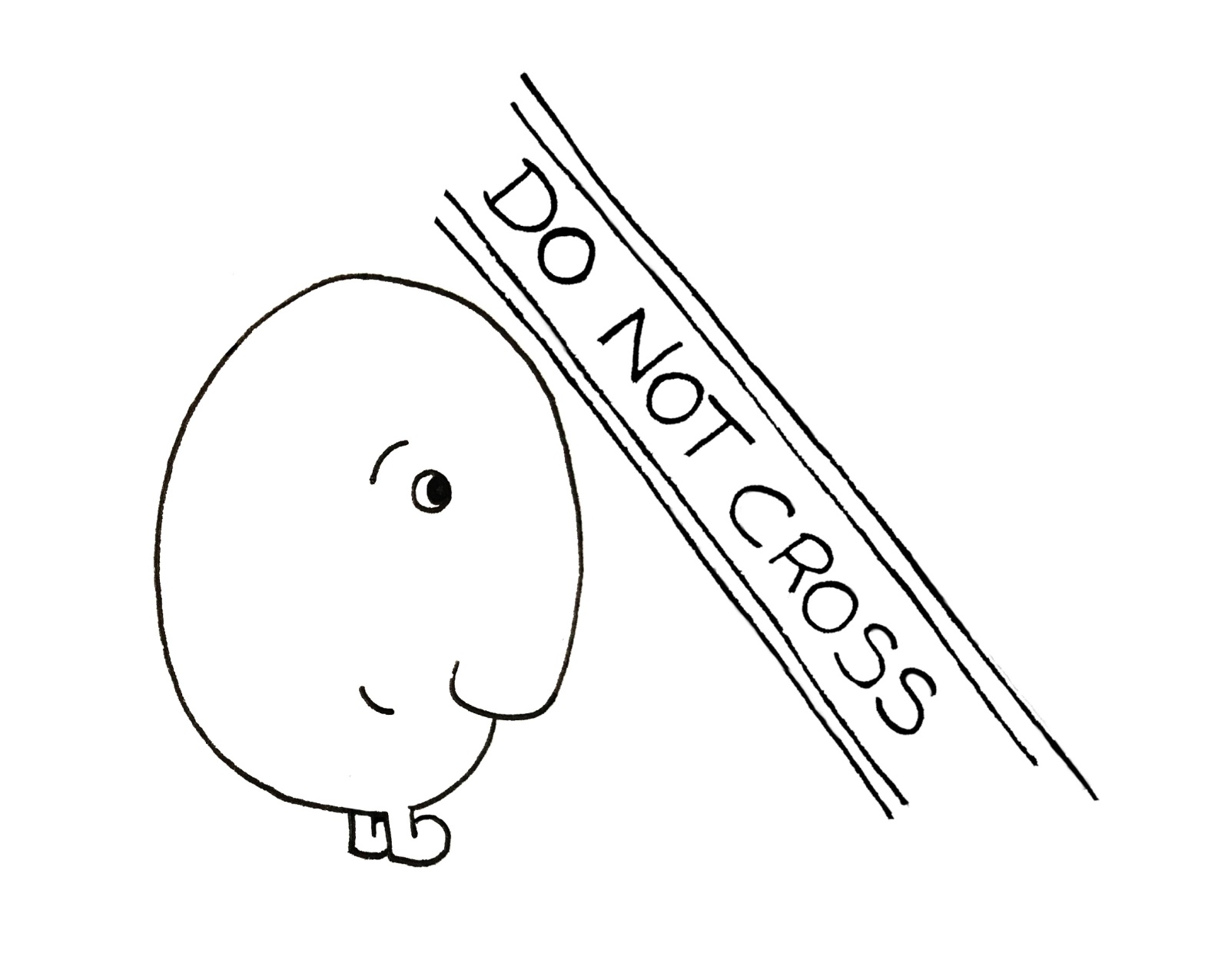
To know your boundaries and convey them in a clear way is essential to feeling good; otherwise anxiety levels can start to rise. For Generation Panic’ers (who often want to commit to everything and keep everyone happy) it may be hard to say ‘no’. 

Can you handle a no?
Boundaries are based on what is important to you; your values, your beliefs. They define who we are and what we stand for. As boundaries are set in relation to others, they naturally affect our relationships. Often our boundaries play a strong(er) role when we interact with our closest relationships, like family members and good friends. 

In these interactions it can be challenging to stand up for your boundaries because we are keen to give in to the ones we love most; we would much rather please them than refuse offers or create a rift.

Often we are afraid that a conflict may arise or that we will not be liked as much anymore and we want to avoid that. But think about it, is it worth it? If something does not feel right or good for you, then the one who will suffer is you. It is time to respect your boundaries, and in doing so, respect yourself. If you can handle a no – then others can too. 

Connect with your values
Connecting to your values will help you feel less anxious. Think about what is important to you and what you truly value. It might be easier to think of moments or times that have felt like a non-negotiable – i.e. you will do it anyway; you will stand up for something/ someone regardless of the consequences. If you are struggling with this, consider a time recently when you felt really frustrated with how someone interacted with you. Using this example, consider what values were being challenged?

For me, time is important. I try to be on time and I do not like it when people are late. For me the value underpinning time is respect – if they respect me and my time and vice versa, then we will all be there when we say we will.

What are your key values and beliefs? This quick exercise can help you find out:

Toolbox: Circles
1. Draw a big circle on a piece of paper.

2. Inside the circle, write down words or symbols to represent your values (e.g., loyalty, honesty, consistency, freedom, kindness, etc.). Pop down anything that comes to mind

3.You could even draw an inner circle to put your core values in, those that you hold in the highest regard, such as love, dependability and commitment. The outside rim represents your boundaries. The clearer you are on where your limits are, the better.

Once you have made your circles, question what boundaries are currently being compromised in some way? And ask yourself, what do you want? NB – this is not what other people want!

Now it is time to tell other people what these boundaries are. By articulating your limits, you will feel less worried and more in control…

It takes practice to communicate your boundaries in an honest and open way. Try to say it in an clear manner: direct and factual, taking out the emotion, whilst still respecting the views of others. It can be by using phrases like “I feel..”, “I think..”, “Please..”, “Please don’t..” as examples.

Honour your values and work out what is important to you. When something does not feel right, take a moment to work out what is going on and why it is not right. And then communicate clearly, telling others what your limits are. You will feel better, I promise.

Comfort Zone – Help or Hinderance?

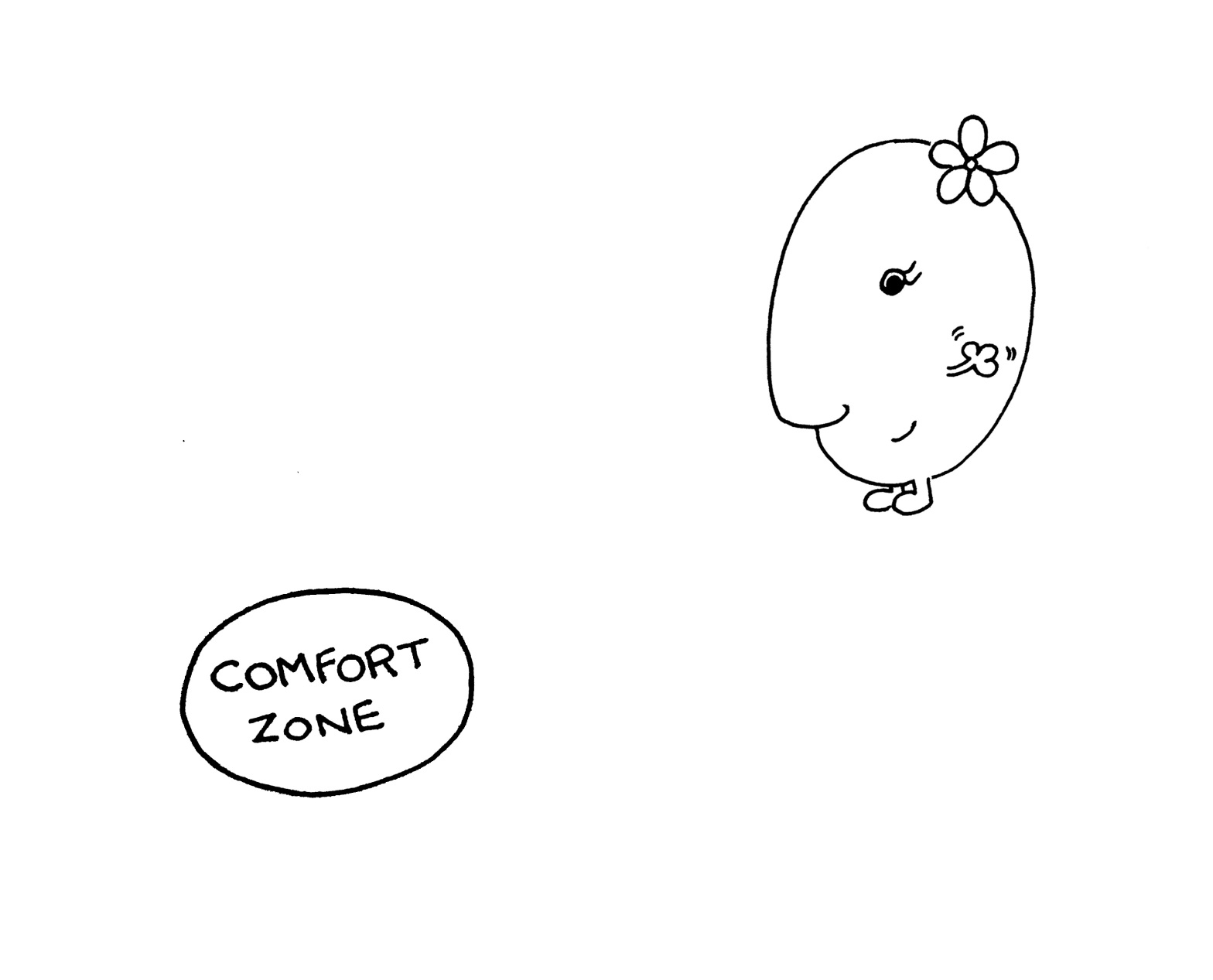
Our comfort zone is a place where we feel safe, protected and peaceful… For much of the time, it can feel like the best place to be. It is beneficial to have a calm spot that you can return to, particularly as it can be so exhausting just getting through the day with your anxiety. Feeling on edge all day means that you need time to ‘switch off’ and have a break. For these moments, your comfort zone can offer you a space to help you relax and re-energise.

But… it is also important to challenge yourself to move forward and not get stuck in your comfort zone. If we stay here too long, we will start to stagnate, rather than stretch, learn and challenge ourselves. So how do we find the balance? How can we slowly push the boundaries of our comfort zone without putting ourselves on the back foot? I find this quotation hits the spot:

A ship is safe in harbour, but that is not what ships are built for.” – John A. Shedd 

So the way that I interpret this, metaphorically speaking, is that we all need to return to harbour to refuel and check that the boat is running well. It can be overwhelming and exhausting to be continuously out on the choppy seas. However, we are not meant to be forever stuck in the harbour – we also need to be sailing to maximise the boat’s potential.

If you get stuck out on the open sea in a storm, ask how you can make yourself feel more comfortable. You do have the choice – to influence and decide how you want to feel.

Go through a trial experimenting with what works well for you and how you can find the right balance between staying in the harbour and being out on the open seas. Even just remembering this quote and what it stands for can help be hugely beneficial.

If you do find yourself out of your comfort zone and feeling overwhelmed, use this quick tip to help you:

Toolbox: Decide you’re (not) going in circles
1. When the anxiety starts to rise, draw (in your minds eye) two circles on the floor – one where you are standing that can be labelled ‘now’ and the other labelled with whatever your comfort zone represents (for example, ‘home’, ‘shower’, ‘running’, ‘café’).

2. Connect to where you are now – all the good and the bad emotions that might be present. Then consider what the ‘safe place’ entails – perhaps it feels calm, peaceful, relaxing.

3. Then, step from ‘now’ to your comfort zone (whatever the second circle is labelled).

4. Immediately notice how much lighter, springier and happier this place feels and be aware of the impact on your body.  

NB try and consider what the second circle represents when you are calm and relaxed. It will be hard to connect with this state if you are feeling anxious and in new surroundings, so having it “to hand” and ready to go for when you are out will be helpful.